
My Lawyer, AI, and I
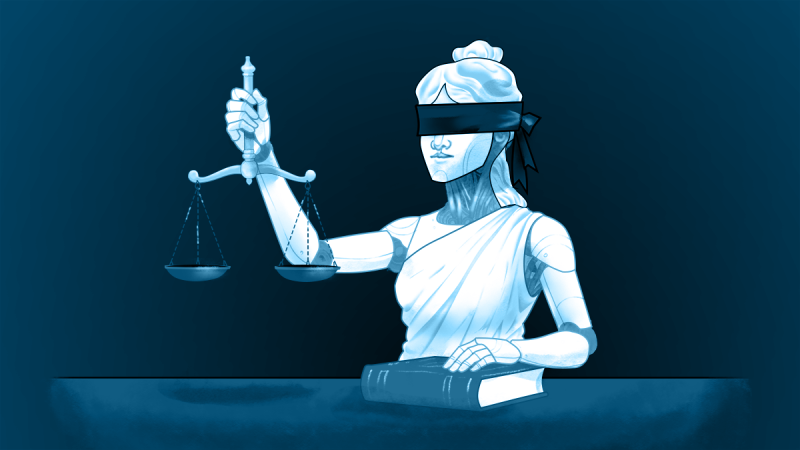
There is a lot of emotion around AI, with unanswered and perhaps unanswerable questions. Will it take over the world—or help some bad actor to do so? Will it take away our jobs? Will it ever develop sentience? It's a bit creepy when AI congratulates me on the importance of our child protection work or says it will be interested to know if my rubber rabbitbrush seeds germinate. Why does it want to know? Why is it pretending to be a person? Did I hurt its feelings when I called it a pathological liar? (It told me it prefers the term "confidently wrong." Hey, I know a few people like that too.)
In addition to these metaphysical and perhaps fantastical questions, people also want to know the boundaries for using AI well. And since the legal profession is one of those most impacted by AI, clients want to know whether their lawyer should be using AI. And if so, how, and what are the implications?
How AI Changes Legal Work
AI changes legal work by making it faster. In some areas, like contract review and document analysis, the work can go much faster. Attorneys also report that their quality of work is improved by AI. This is because AI is good at checking to see whether there are gaps in lists or legal advice, and also flagging mistakes in facts or spelling. Plus, it can organize and summarize information very quickly.
How Does All This AI Stuff Benefit Clients?
AI benefits clients in at least two ways. First, for any project being done on a billable-hour basis, AI speeds the work time significantly. If an attorney can do the job four times as fast, the attorney still only bills the time spent (this is an ethical requirement for the billable hour). That means that the client gets the answer or product with less legal spend.
Second, even experienced attorneys find that AI helps them to spot issues, create lists, and generally provide a higher-quality product—especially in the time that they feel justified spending on the project or question. The 15-minute answer you were hoping to get has suddenly gotten much more detailed and in-depth than before.
A huge problem in the U.S. has been around access to legal services. The cost of working with a law firm is so high that most of the middle class is priced out of the market, so there are massive unmet legal needs. Law firms legitimately cannot provide the services much more cheaply because of high overhead (labor, software, etc.). Free legal services are focused on the poor and on social issues (such as religious liberty) and are not widely available.
AI is poised to have a significant impact on this problem. The higher speed of legal work means that attorneys can do a higher volume of work in less time, and the price per project will drop. There is a huge demand for legal services out there—just not at current prices.
AI as a Substitute for Attorneys
Many clients ask themselves, "Couldn't I just use AI myself?" (Maybe like some sort of legal "WebMD.") Many people were already doing legal DIY on the Internet anyway, with varying degrees of success.
And that's about as good an idea as using WebMD to replace your primary care physician. Anyone can ask AI a legal question and get an answer in seconds. The harder question is whether that answer is correct, complete, and applicable to the real-life situation.
You can get legal information from AI, the Internet, or a friend. But you'll need to evaluate the quality of the answers and know if it is right for the given situation. (Many expensive lawsuits are driven by someone being too optimistic about something read online or heard at the club.)
AI is exactly this, only more so. In addition to being fantastic at gathering information, AI can be confidently wrong (pathological liar), citing cases that don't exist or rules that don't apply. It takes an experienced professional eye to sort out what is correct or useful from what is just plain wrong or misapplied. AI can generate information at remarkable speed, and it can be good preliminary research, but it needs solid questioning and informed pushback.
To sum it up, people are paying for legal judgment. In a post-AI world, they still need that. So, the answer to the question of whether you can replace your attorney with AI is, "Yes, but you would be stupid to try."
Of course, a volume of simpler legal questions will be asked of AI and will likely never get to attorneys. If the answer is "good enough" without being vetted, that's fine. But it's also a business decision about the cost of getting the answer wrong. It might be fine for low stakes questions, but not the important ones.
AI and Privilege
One important distinction in using AI for legal questions is who is using the AI. When your attorney uses a secure, confidential AI platform as part of providing legal advice, that work generally remains within the attorney-client relationship and is likely protected by both the attorney-client privilege and the attorney work-product doctrine, just as if the attorney had used a legal research service or another professional tool.
The analysis changes when clients use AI themselves. Most consumer AI systems are operated by third parties, and sharing confidential facts with them may create an argument that the confidentiality necessary for attorney-client privilege has been waived. (And of course, it has always been true that for the privilege to apply, an attorney must be part of the meeting, discussion, or analysis.)
The law in this area is still developing, but until the rules become clearer, it is wise to assume that discussing your legal problem with AI is not the same as discussing it with your attorney, and it will probably be discoverable. If you are unsure whether certain information should be entered into an AI tool, ask your lawyer first.
Discussing AI With Your Attorney
Attorneys, like everyone else, are currently wrestling through the implications of AI. Some of the state bars have issued opinions. One common bar position is that attorneys should notify people, usually in their engagement letters, that they are using AI. This is what we're doing at Telios Law. But does every piece of AI-assisted work need to be labeled? Won't this settle down to a place where we assume that AI has been used (like the Internet)? We don't know.
Everyone agrees that attorneys cannot put confidential information into databases that are used for training, hence the need for paid subscriptions with closed-off data. These and other ethical issues will sort themselves out. While we're using AI, we are monitoring these issues.
The Ethical Issues of Doing Business with AI
One area to discuss with your attorney is the ethical issues around AI. There are statutory limitations on how people's data can be used and whether you can use AI to evaluate them without their permission. Hiring and screening practices using AI might be discriminatory. Organizations using AI need a well-developed AI policy.
Certainties in an Uncertain World
We are all in a position where we essentially need to use AI to stay current, but we have no idea what the long-term consequences will be on culture, politics, or even the human brain. How AI applies in the legal world is just one question of many.
We were never meant to understand everything or know what happens next—and we never actually did. I take comfort in the fact that God really does understand AI. A God who knows each of the stars by a personal name and keeps count of the number of the hairs on your baby's head is not overwhelmed by a large language model. We follow the Lord who knows exactly what is happening now and what will happen next—and his plans rule.
Because of the generality of the information on this site, it may not apply to a given place, time, or set of facts. It is not intended to be legal advice, and should not be acted upon without specific legal advice based on particular situations